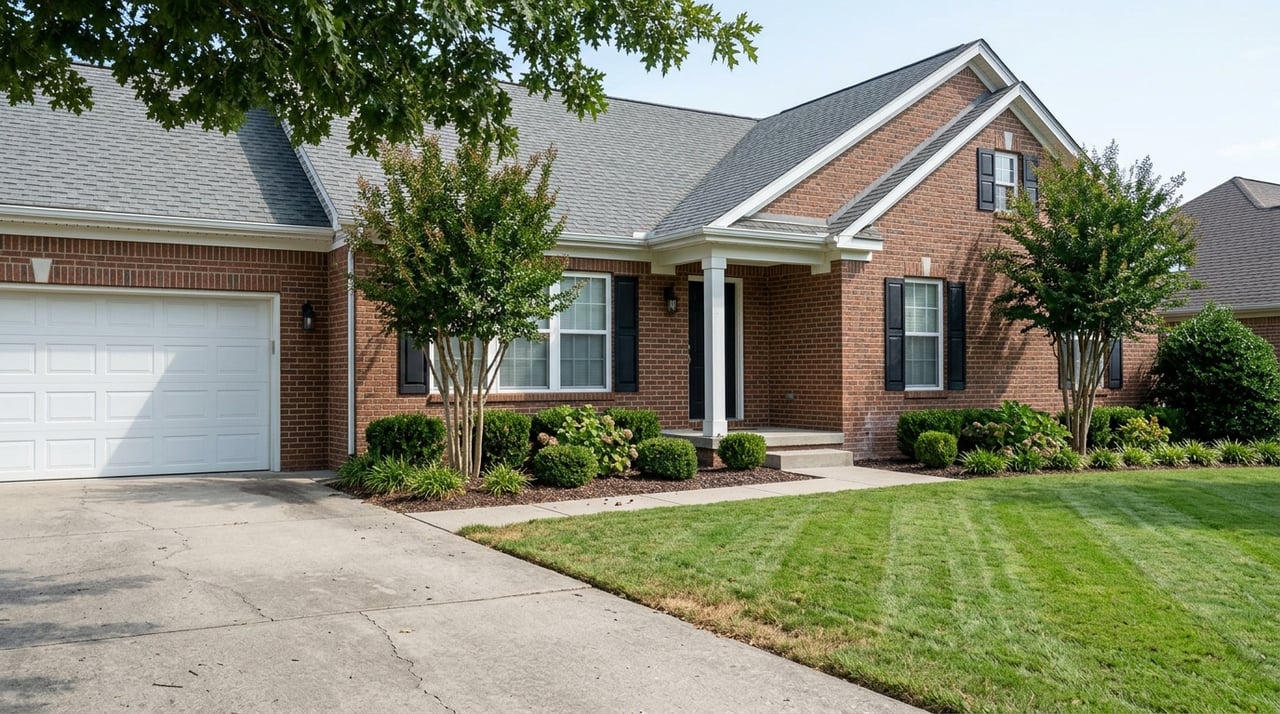
How To Price Your Greenville Home In Any Market
June 18, 2026
June 18, 2026
Wondering how to price your Greenville home without leaving money on the table or watching it sit too long? You are not alone. In a market where inventory, mortgage rates, and buyer demand can all shift, the right price is less about guessing and more about reading the evidence in front of you. This guide will show you how to think about pricing in Greenville, what local numbers mean for your strategy, and how to make smart adjustments based on your home and your timing. Let’s dive in.
When you price a home in Greenville, broad market headlines only tell part of the story. The Greater Greenville Association of REALTORS® region gives useful context, but your actual price should still come from neighborhood-level comparable sales and current competition.
That matters because Greenville is growing, and different pockets of the market can behave differently. Greenville city was estimated at 75,310 people in 2025, up 5.9% from 2020, while Greenville County reached 583,125, up 11.0%. More people can support housing demand, but pricing still depends on what buyers are seeing and choosing right now.
The latest regional data shows a market that is still fairly competitive, even with more listings available. As of March 10, 2026, inventory was up 28.2% to 5,444 active listings, while pending sales rose 6.6% over the prior 12 months.
At the same time, the overall median sales price rose 1.6% to $319,900. For single-family homes, the median sales price was $330,000. Homes also received an average of 98.3% of their last list price, which is a useful reminder that buyers are still paying close to asking when homes are priced well.
Months of supply help explain the balance. The market had 3.7 months of supply overall, with 3.5 months for single-family homes and 4.7 months for condos. That still points to relatively tight conditions, but it also means buyers have more choices than they did when inventory was lower.
Even in a stronger seller environment, overpricing can work against you. Buyers compare your home against recent sales, current listings, and what their monthly payment looks like at current mortgage rates.
Freddie Mac reported a 30-year fixed average of 6.52% on June 11, 2026. When rates are in that range, affordability becomes a bigger part of buyer decision-making. A home that feels slightly overpriced on paper can quickly fall off a buyer’s shortlist if the payment stretches too far.
Local job conditions also matter. The Greenville-Anderson-Greer metro unemployment rate was 3.3% in April 2026, and employment was up 1.4% year over year. That kind of stability can support buyer demand, but it does not replace the need for accurate pricing.
The strongest starting point is a comparative market analysis, often called a CMA. A solid CMA looks at similar homes recently sold in the same area, along with homes that are currently under contract and active listings competing with yours.
That process helps answer the question buyers will ask, even if they never say it out loud: How does this home compare to the others I can buy? If your list price is meaningfully higher than the evidence supports, buyers may skip it before they ever visit.
A pricing recommendation should also account for your home’s size, location, features, condition, and updates. The right number is not just about square footage. It is about how your property fits into the choices buyers actually have today.
Closed sales are usually the clearest signal because they show what buyers were willing to pay. They help establish a realistic value range based on recent behavior, not seller hopes.
Still, sold comps are only part of the picture. Because the market changes, you also need to look at homes currently under contract and active listings. If the newest competition is stronger or more aggressive on price, your strategy may need to adjust.
Your home does not compete with the sale from three months ago as much as it competes with the homes buyers can tour this week. That is especially important now that inventory has increased.
If nearby listings offer similar space, condition, or upgrades at a lower price, buyers may expect your home to match that value. If your home shows better and offers more, there may be room to price higher, but that difference has to be obvious.
Two homes with the same floor plan can still command different prices. Cleanliness, maintenance, recent updates, and overall presentation all influence how buyers perceive value.
This is where practical seller prep can make a real difference. In NAR’s 2025 staging survey, 29% of agents said staging led to a 1% to 10% increase in the dollar value offered, and 49% said staging reduced time on market. The most common recommendations were decluttering, cleaning, and improving curb appeal.
For many sellers, that means the price conversation should include prep work. A well-prepared home often supports a stronger launch because buyers feel less need to discount for effort, repairs, or uncertainty.
Not every segment of the Greenville market moves at the same pace. Regional data shows that homes priced at $150,000 and below averaged 48 days on market, while homes priced at $1,000,001 and above averaged 62 days.
There is also nuance in the upper ranges. Homes in the $750,001 to $1,000,000 band posted the strongest pending-sales growth at 22.5%, but they also had 5.1 months of supply. That suggests demand is present, yet competition is stronger, so pricing discipline matters.
If your home falls into a higher price bracket, you may need an even tighter strategy. Buyers in those ranges often compare options carefully and may take more time to act.
If you are selling a condo or townhome-style property, pay close attention to supply. Condo inventory sat at 4.7 months of supply, compared with 3.5 months for single-family homes.
That does not mean condos are weak. It does mean buyers may have more options, so your list price has to reflect current competition more closely. A condo that enters the market above the local value range may feel easy for buyers to pass over.
Your ideal pricing strategy depends in part on how fast you want to move. If speed matters, a more competitive price can help attract stronger early attention.
If you have more flexibility, you may test a higher number, but that only works when the home, comps, and current competition support it. The key is to think beyond the asking price and focus on the likely net outcome.
That includes possible repairs, concessions, and time on market. Sometimes a home listed too high ends up taking longer, selling for less, and requiring more negotiation in the end.
The market often gives you useful feedback quickly. Early showings, buyer comments, and overall activity can tell you whether your price lines up with current demand.
If interest is weak compared with similar listings, price may be part of the issue. In many cases, the first price is your best chance to capture serious buyers who are actively watching new listings.
This is why trying to time the market perfectly usually is not the best strategy. Markets can shift quickly with rates, employment, seasonality, and buyer confidence. A better approach is to price from the best available evidence now.
If you want a simple framework, start here:
This kind of evidence-based strategy tends to work in any market because it is rooted in what buyers are actually doing, not what you hope they might do.
A good price is never just a number pulled from a website. It is a strategy built from local comps, competition, condition, and timing.
That is where hands-on guidance can help. When you have someone looking at your specific neighborhood, price band, and presentation plan, you can make decisions with more confidence and less stress.
If you are thinking about selling in Greenville, Judy Johnson can help you build a pricing strategy based on current local data, practical home prep, and your goals.
Stay up to date on the latest real estate trends.

We understand that buying or selling a home is more than just a transaction: it's a life-changing experience. That's why our team of highly-seasoned real estate professionals is dedicated to providing exceptional, personalized service for all of our clients.