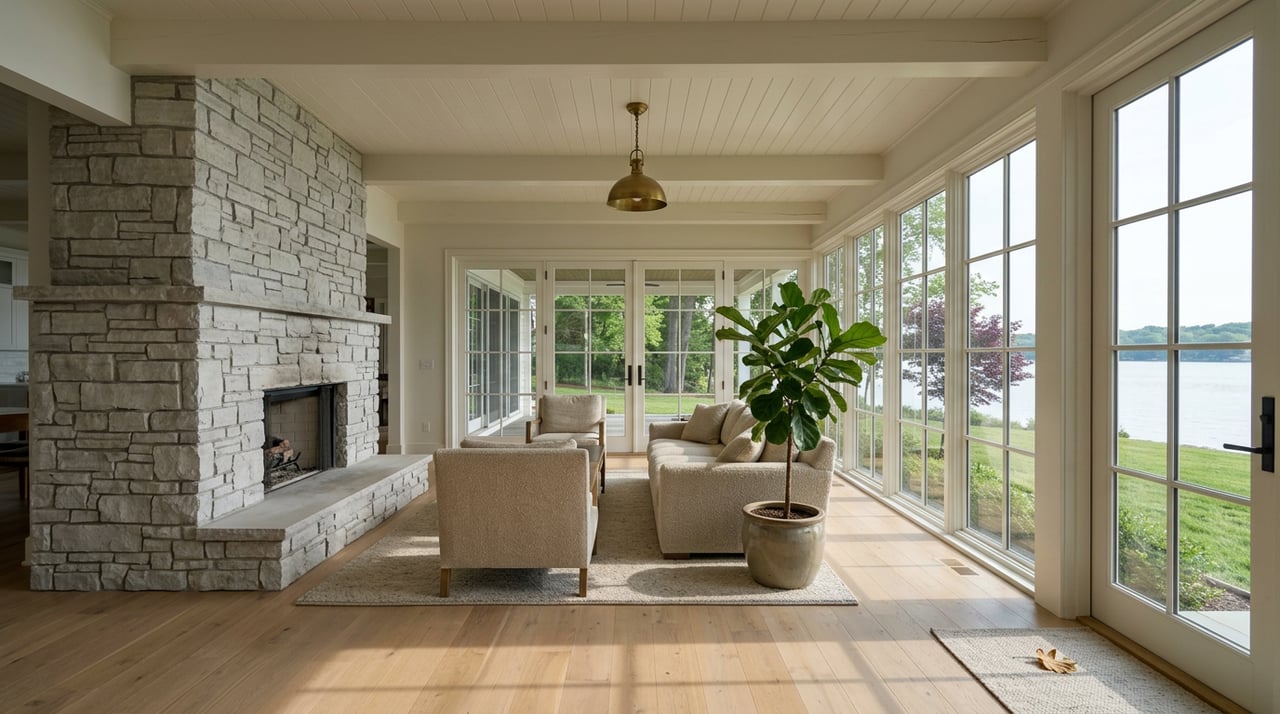
Lake Hartwell Dock Access: What Waterfront Buyers Should Ask
August 27, 2026
August 27, 2026
Walk two Lake Hartwell listings this month, priced within a few thousand dollars of each other, and you can end up standing in two very different places. At one, the dock rocks gently on open water, exactly like the listing photo. At the other, the dock sits several feet above a stretch of cracked red clay, and the walk from the yard to the waterline is longer than anyone mentioned on the phone. Same price range. Same "waterfront" label. Completely different property.
That gap has always existed on Lake Hartwell. This year, it's just easier to see.
As of early August 2026, Lake Hartwell was sitting around 652.8 feet above sea level, roughly 7.2 feet below the lake's summer full pool target of 660 feet. The lake has held in this range, and in the Army Corps of Engineers' Drought Trigger Level 2 status, which kicks in at or below 654 feet, since January. The swing is stark by recent standards: around this time last year the lake was sitting at full pool, and in 2024 it ran about a foot above full pool. The Corps has pointed to a rainfall shortfall of roughly 30 inches across the upper Savannah River basin as the driver.
The practical fallout has been a string of boat ramp closures on both sides of the lake: Rocky Ford in Hart County, Georgia, and Reed Creek nearby, plus on the South Carolina side, Durham, the left lane at Hattons Ford, Springfield Campground, and Townville in Anderson County, and Tabor and Oconee Point Campground in Oconee County. A Corps ranger warned boaters ahead of Memorial Day weekend that coves people had used for years might not be there anymore, making familiar routes less predictable.
None of that is a reason to avoid the lake. It's a reason to look at waterfront listings differently than you would in a normal year, because low water is stripping away the parts of a listing photo that hide the truth about access.
Before you get to dock type or water depth, every parcel on Lake Hartwell already carries a designation that decides whether a dock is even possible. The Army Corps of Engineers classifies the shoreline into three zones as part of its shoreline management program:
| Zone | What's allowed | Approximate share of shoreline |
|---|---|---|
| Green | Docks may be permitted, along with underbrushing and cart paths | About 50% |
| Yellow | No docks, but some underbrushing and beaching a boat may be allowed | About 26% |
| Red | No docks, no improvements of any kind | About 24% |
Yahoo Answers says roughly half the shoreline around this lake can never carry a private dock, no matter what a listing calls itself or how the photos are framed. A "waterfront" home on red or yellow frontage might have a gorgeous view and a walk to the water, but if you're picturing tying up a boat at your own dock, that picture depends entirely on a color you can't see from the listing description. It's set by the Corps, not by the seller, and it doesn't change with the market.
If dock access matters to you, the zone is the first thing to confirm, before square footage, before finishes, before anything else.
Even inside a green zone, not all docks behave the same way when the lake drops. Floating docks ride up and down with the water level, so a home with a floating dock that was usable in April is very likely still usable now. Fixed or platform docks are built at a set height, which works fine at full pool but can leave the structure sitting well above the water, or entirely on dry ground, once the lake falls several feet.
This year has made that distinction visible in a way it usually isn't. Some current listings are explicitly noting that their docks are still floating despite the lake running more than seven feet below full pool, because it's become a genuine selling point rather than a throwaway detail. If you're touring a home with a fixed dock right now, ask directly how far it currently sits from the water, and whether that's changed since the photos were taken.
As FOX Carolina reported, a Corps park ranger cautioned ahead of Memorial Day weekend: "There could be hazards lurking just under the water's surface" that weren't a problem when the lake was full.
That warning was aimed at boaters, but it applies just as well to a buyer walking a dock for the first time.
Zone status shows up in price, and the numbers back that up. Among dockable lots on Lake Hartwell over the past year, the floor for a lot that can qualify for a dock permit has run around $100,000, with a median near $250,000 and a top sale around $550,000. That range is entirely about permit eligibility and location, not square footage of the lot itself.
Put another way, the premium you pay for "dockable" versus "waterfront" is often the single largest line item in a Lake Hartwell purchase that has nothing to do with the house. Two homes can be nearly identical in size and finish and still differ by six figures once you factor in whether the shoreline in front of them is green, yellow, or red.
A few questions turn a scenic tour into an informed one:
A seller or listing agent may not have all of this at hand, but the Corps' Savannah District office and current USGS gauge data for Hartwell Lake can confirm zone status and live water level before you're too far into a contract to walk away easily.
Lake Hartwell's water level moves seasonally on its own. Full pool targets sit at 660 feet from mid-April through mid-October and drop to 656 feet in winter, and the lake has climbed back out of drought conditions before. There's no way to promise when meaningful rain returns to the upper Savannah River basin, or when the Corps will move off Drought Trigger Level 2.
What won't change with the next good rainy season is the zone color on a given parcel. A green-zone lot with a floating dock will be a green-zone lot with a floating dock in a wet year or a dry one. A red-zone lot with a nice view will still never carry a dock. That's exactly why touring during a low-water year is useful rather than discouraging. You're seeing the property with less of the illusion that full pool provides, and that's information worth having before you buy, not after.
Does low water mean lower prices on Lake Hartwell? Not automatically. Pricing on this lake tracks zone status and dock type more closely than it tracks the water level on any given week. A green-zone lot with a floating dock holds its value differently than a yellow or red-zone lot, regardless of where the lake sits that month.
Will the lake refill before I close? There's no reliable timeline. The Corps manages releases based on rainfall in the basin, and this drought has persisted since January with no clear end date. Plan around the property's zone and dock type, not around an assumption that the lake will look different by closing day.
How do I confirm a lot's zone before making an offer? The Corps of Engineers Savannah District can confirm shoreline zoning for a specific parcel, and it's worth doing before you get attached to a property. If you'd rather not track that down on your own, that's exactly the kind of legwork I do for clients before we ever get to a contract.
If you're comparing homes on Lake Hartwell right now and want someone to actually confirm the zone, check the dock, and walk the current path to the water before you make a decision, reach out to Judy Johnson. And if you already own on the lake and are curious how this year's conditions affect what your place is worth, start with a free home valuation. It's a quick way to see where you stand before the next rain, or the next buyer, changes the picture.
This article is general information, not legal, tax or financial advice. Consult a qualified professional about your situation.
Stay up to date on the latest real estate trends.
We understand that buying or selling a home is more than just a transaction: it's a life-changing experience. That's why our team of highly-seasoned real estate professionals is dedicated to providing exceptional, personalized service for all of our clients.